
Casi algo is a Spanish phrase that translates literally to “almost something.” In romantic slang, it describes a connection that is more than friendship but never became a defined relationship. This guide explains what it means, how people use it, and why it stings.
You Probably Found This Because of a Feeling, Not a Word
Maybe you saw it in a song. Maybe someone texted it to you. Maybe it described a person you still think about.
Most people don’t search for “casi algo” out of curiosity about grammar. They search because something in their life has no name.
The definition is simple. The feeling is not. That is why this article covers both.
The Feeling Behind the Words
Casi means “almost.” Algo means “something.” Together, they describe a space between two states.
A “casi algo” is a connection with real feelings but no agreed commitment. There were messages, late nights, maybe kisses. There was never a clear conversation about what it was.
That gap is where the pain lives. A clean ending gives you something to grieve. An almost gives you questions:
- Was it real?
- Did they feel it too?
- What did I miss?
- Could it have worked?
You can’t mourn a relationship that never officially existed. That is the emotional core of the phrase.
How People Actually Use It
Spanish speakers use casi algo in three main ways.
- As a noun for a person. “Es mi casi algo” means “That’s my almost-something.” It labels someone you’re involved with but not committed to.
- As a description of the past. “Fue un casi algo” means “It was an almost-something.” It names a connection that faded without closure.
- As a general phrase for near-misses. In rare cases, it describes anything that nearly happened, such as an almost-opportunity.
The relationship meaning is by far the most common today.
Common patterns you’ll hear:
- Tengo un casi algo con alguien. (I have an almost-something with someone.)
- Lo nuestro fue un casi algo. (What we had was an almost-something.)
- Éramos un casi algo. (We were an almost-something.)
Tone Changes Everything With This Phrase

The same three words can sound playful, bitter, or heartbroken. Tone determines whether “casi algo” is a casual label or an emotional confession.
| Tone | Example situation | What it signals |
| Playful | Introducing a fling to friends | “We’re keeping it light.” |
| Dismissive | Describing an ex who never committed | “It didn’t count.” |
| Wistful | Looking back after months of silence | “I wish it had become more.” |
| Defensive | Answering “Are you two dating?” | “Don’t push me to define it.” |
| Raw | Texting someone who disappeared | “You mattered to me.” |
Listen to the delivery, not just the words. A shrug and a sigh turn the same phrase into two different messages.
Casi Algo vs. Situationship: Worth Knowing the Difference
The two terms overlap heavily, but they are not identical.
A situationship is an undefined romantic arrangement that continues over time, while “casi algo” can describe any almost-relationship, including one that already ended.
| Feature | Casi algo | Situationship |
| Language of origin | Spanish | English |
| Time frame | Present or past | Usually ongoing |
| Emotional weight | Often wistful or nostalgic | Often frustrated or confused |
| Implies an end? | Frequently | Not necessarily |
| Typical use | “Fue un casi algo.” | “We’re in a situationship.” |
Related Spanish terms include amigos con derechos (friends with benefits) and amigovios (a blend of amigos and novios). Both imply an arrangement. Casi algo leans more toward unfinished emotion.
Casi Algo Meaning in Relationship Reddit
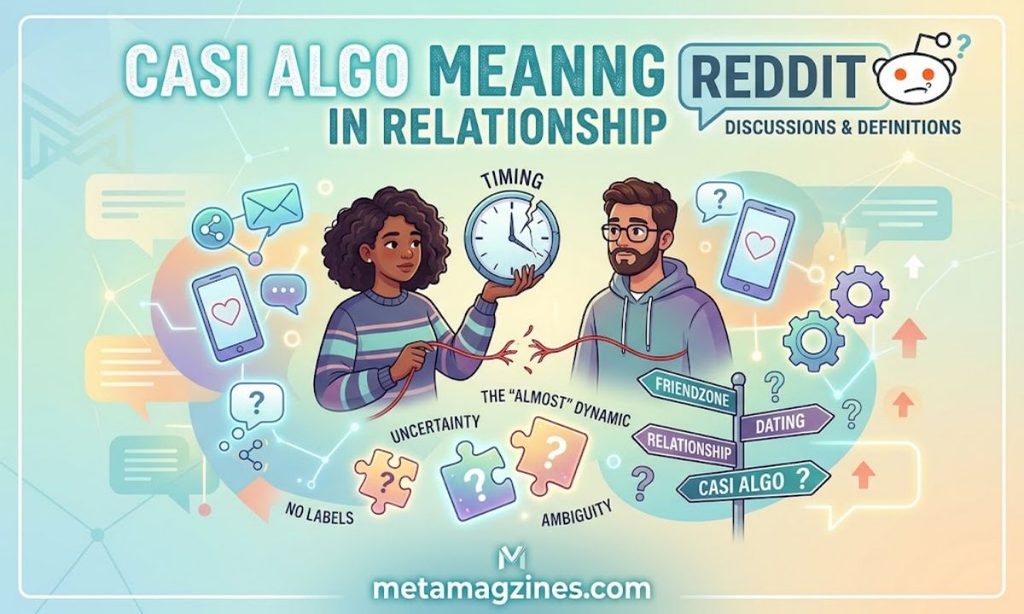
Online relationship forums, Reddit included, tend to describe the phrase in a few recurring ways. These are general patterns, not quotes from any specific thread.
- Mismatched expectations. One person wants a label. The other avoids it.
- The “almost” as a trap. People stay because it feels close to becoming something.
- Delayed grief. People say they struggle to mourn something that was never official.
- Mixed signals. Warm messages alternate with long silences.
Psychologists often describe this pattern as ambiguous loss: grief without a clear event to point to. The term was developed by family therapist Pauline Boss in a different context, but it fits well here.
If these patterns sound familiar, you are not overreacting. Ambiguity is genuinely hard on the mind.
The Song That Made It Go Everywhere
Several Spanish-language songs use the title Casi Algo, which helped the phrase spread.
- Blessd and Almighty released a reggaeton track called “Casi Algo.” It treats the phrase as a casual, flirty label for someone who calls late at night. The mood is playful, not sad.
- Dulce María recorded a different song with the same title. It is a ballad about a connection that ended without a goodbye. The tone is the opposite: reflective and heavy.
- Xavi has a track called “Tu Casi Algo.” It frames the phrase as something to walk away from with confidence.
Three songs, three moods. That range explains why the phrase feels both light and painful. Songs gave the phrase a soundtrack, and social media gave it reach.
I’m not quoting the lyrics here. You can read them on licensed lyric sites.
When This Phrase Doesn’t Belong
Don’t use casi algo when it would minimize something real or confuse the other person.
Skip the phrase when:
- You are in a committed relationship, even a new one.
- You’re speaking to someone who thinks you are together.
- You want a serious conversation about commitment. The label can dodge the issue.
- You are describing a family member, coworker, or friend. The romantic meaning would be misread.
- You are in a formal or professional setting.
It is also a poor fit when someone is genuinely hurt. Calling their feelings “just a casi algo” can sound cruel.
Read More: TMB Meaning in Text: Why Everyone’s Using It (And When You Shouldn’t)
Ways to Say It Without Using the Phrase
Sometimes you want clearer language. Here are alternatives, grouped by purpose.
To be direct:
- “We never defined what we were.”
- “We were more than friends, but not together.”
To be gentle:
- “It was something, but we never put a name on it.”
- “We were figuring it out.”
To be honest about hurt:
- “I wanted more than you could give.”
- “I’m sad it never became anything.”
In Spanish:
- Algo sin etiqueta (something without a label)
- Algo que nunca definimos (something we never defined)
- Ni amigos ni pareja (neither friends nor a couple)
Clear language often helps both people. Labels aren’t the goal, but honesty is.
Real Exchanges That Sound Like Actual People
Example 1: A friend asking
Ana: ¿Y qué pasó con Diego?
Sofía: Nada, fue un casi algo.
Ana: Ay, de esos que duelen más.
(Ana: “What happened with Diego?” Sofía: “Nothing, it was an almost-something.” Ana: “Ah, the kind that hurt more.”)
Example 2: Setting a boundary
Luis: ¿Entonces somos novios?
Marta: Todavía somos un casi algo. Dame tiempo.
(Luis: “So are we dating?” Marta: “We’re still an almost-something. Give me time.”)
Example 3: Closure, finally
Camila: Nunca hablamos de lo que éramos.
Pablo: Lo sé. Fue un casi algo y me costó aceptarlo.
(Camila: “We never talked about what we were.” Pablo: “I know. It was an almost-something and it took me a while to accept that.”)
Notice how short and casual these are. People rarely explain the phrase. They assume the other person understands.
What People Get Wrong About It

Myth 1: It always means a failed romance.
It can describe a fling that is still active. Blessd’s song treats it as playful.
Myth 2: It means the same as “friends with benefits.”
Not exactly. Casi algo implies feelings. A casual arrangement may not.
Myth 3: It’s always one person’s fault.
Often both people avoided the label. Ambiguity is frequently shared.
Myth 4: The literal translation is enough.
“Almost something” is accurate but incomplete. English has no single phrase that captures the same emotion.
Myth 5: It’s only for young people.
Younger speakers popularized it online, but adults of any age can use it.
Conclusion
Casi algo means “almost something,” but the meaning is bigger than the translation. It names a connection that mattered and had no label, and that is why it can hurt more than nothing.
If you are in one now, name what you want and say it clearly. If you are leaving one, give yourself permission to grieve it. Real feelings don’t need a title to count.
Next time you hear the phrase, listen for the tone. It will tell you whether the speaker is joking, hiding, or hurting.

